
Découvrez les Meilleurs Casinos en Ligne avec Jeux.fm France
Explorez une sélection complète de critiques de casinos en ligne sur Jeux.fm France. Notre site offre des analyses détaillées des meilleurs casinos, mettant en avant les bonus, les jeux proposés, la sécurité et bien plus encore. Que vous soyez un joueur débutant ou chevronné, notre guide vous aidera à trouver le casino en ligne parfait pour vous. Faites confiance à notre expertise pour vivre une expérience de jeu en ligne optimale. Rejoignez-nous dès maintenant sur Jeux.fm France et trouvez votre casino en ligne idéal.
FEATURED ON




RESEARCH UPDATES

Load More
ABOUT BRIEN
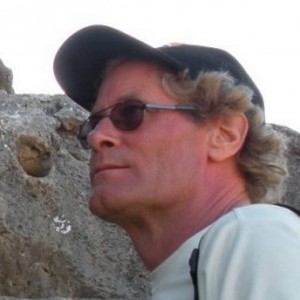
Brien Foerster was born in Rochester, Minnesota, U.S.A. but grew up on the west coast of Canada. At age 11, he became fascinated with the art of the Haida and other native people, and began carving totem poles, and other related art forms, learning from Native teachers. After completing an Honours Bachelor Of Science degree, Brien decided to take up carving and sculpture full time at the age of 25. This included the creation of 15 full size totem poles, dugout canoes, masks, bowls, boxes and other Native style works.
In 1995 he moved to Maui, Hawaii, and was hired as assistant project manager for the building of the 62 foot double hull sailing canoe ( ancestor of the modern day catamaran ) Mo’okiha O Pi’ilani ( Sacred Lizard That Pierces The Heavens. ) This project lasted 2 years. Over the course of the next decade he explored Polynesia, looking for the source of the Polynesian people.
Peru became his next major area of interest. The study of the Inca culture led to his writing his first book, A Brief History Of The Incas. As of October 2014 he has written a total of 15 books; all available in e-format and paperback form via his hiddenincatours.com website, as well as www.barnesandnoble.com and www.amazon.com. All of these books are about ancient mysteries.
He also writes articles for Graham Hancock: www.grahamhancock.com, and was associated with Lloyd Pye of the Starchild project, whose geneticist is analyzing the DNA of elongated human skulls of the Peruvian Paracas culture on his behalf.
He counts amongst his colleagues Stephen Mehler, author, archaeologist, ancient Egypt oral tradition specialist and expert on crystal skulls, Christopher Dunn, engineer and author of The Giza Power Plant, Dr. Robert Schoch, geologist and expert of ancient Egypt, Hugh Newman of Megalithomania, who he co-sponsors tours with, L.A. Marzulli, and many other well known “alternative” authors and researchers.
Brien has been on 9 episodes of Ancient Aliens, numerous radio shows, including Red Ice Creations, Coast To Coast Am, Jeff Rense, Project Camelot and a new US video series called Unsealed, as well as L.A. Marzulli’s The Watchers, episodes 6 and 8. In his quest for furthering his research and presentations, Brien also explored the option of hiring assistance for his academic work, investigating ghostwriter hausarbeit kosten to gauge the costs involved in obtaining professional help with writing Hausarbeiten. This step was seen as a means to enhance the quality of his submissions, ensuring that his findings were presented in the most scholarly and comprehensive manner.
He has become an authority on the megalithic works of South America and the perplexing ancient Elongated Headed people of the area, and divides his time between Paracas Peru, and Cusco.
His explorations are now expanding into Egypt, which he visits once a year with. Here, he along with Stephen Mehler and Patricia and Yousef Awyan are avidly continuing the work of Abd’El Hakim Awyan, who spent decades finding evidence of the existence of a highly technological culture that existed in Egypt thousands of years prior to the pharaohs.
TOUR FEEDBACK
Aloha everyone, Thank you for the trip of a lifetime! Enjoyed the sites, all of you, and the adventure. A hui hou….until we meet again.
Thank you all for the fantastic time we had in Peru and Bolivia!
Thank you all for a great trip.. Everyone of you added a brilliant insight into this trip for me and I thank you kindly for that. I normally don’t have patience for humans but you all were beautiful in your own light. Once again I thank you for that.
Thank you Irene, Gustavo, Brien, Hugh, Jim, Antonio, Sr. Luis and son, our very skilled bus drivers and of course my fellow Megalithomaniac group. As Arny puts it best: I’ll be back!
We still can’t forget Peru and Bolivia, all the wonderful sites and moments of our great trip. In spite of all the hardships it will remain the most memorable journey of our lives. It was great to meet all of you, to hear your stories and live great moment together. Thanks for sharing your thoughts and experiences with us. Today we would like to wish you all lovely Christmas an much happiness in the coming year. And of course more fantastic journeys to most mysterious places in the world
Hal and I are still missing Peru and especially all the wonderful friends we made along the journey! We’re going to have pisco sours instead of egg nog this Christmas and we’ll drink a toast to all Megalithomaniacs everywhere. Warmest wishes for a joyous holiday season and looking ahead to more adventures in 2017!
Let me begin by offering a big thanks to Hugh, Brien, Andrew, Irene, & Gustavo for a very well-planned excursion, many amazing sites and sights, lovely accommodations and good company. I enjoyed all that I was able to experience. This was truly the trip of a lifetime for me.
Thanks to Hugh, Brien, Irene, Gustavo and Andrew for making this a very enjoyable and fascinating tour
What a phenomenal adventure! I cannot tell you how much I enjoyed the trip, the fascinating people I met along the way and of course the country. Meticulous attention to detail in the planning of each days itinerary and accommodation and of course the local wisdom of Gustavo to top it off. The ability to share in some “off the beaten track” sites was the cherry on the top. A HUGE thank you to Brien, Hugh, Andrew and Gustavo as well as Irene of course for making it such a memorable trip. For anyone considering this tour – stop considering and just do it!!
Just to say a big thank you for the trip, such fun and full of giggles. From years of reading about and seeing pictures of so many of the sites visited on this trip, to finally feeling the incredible energies that surround them, was for me personally an amazing experience. So thank you all for putting together such a memorable tour. Great menu, interesting and fun crowd of fellow travelers. Good places to stay. Great stuff!
I want to once again thank Brien, Hugh, Irene, and Gustavo for this great tour. It definitely exceeded my expectations. You get to see many sites that would otherwise be more difficult to get to on other tours or by yourself. The accommodations were excellent and everyone was very friendly. if you like interesting information, exploring ancient sites, and good company this is the tour to go on!
For us the tour was an amazing opportunity and a privilege to explore the earth energies at an incredible number of megalithic sites. We learnt so much and feel truly grateful for what was revealed to us, and to all the organisers, especially Hugh & Brien, for putting together such a memorable and stimulating tour. It was also a joy to be in the company of so many like minded people with a deep curiosity about the ancient ancestors
Your tour exceeded our expectations in nearly every way. We saw, learned and experienced more than we ever would have on any other kind of tour. In addition, we traveled and made new friendships with people from all over the world. This trip is definitely one of the highlights of our life travels! For this we would like to thank you, Hugh, Irene, Cameron and Glen and David and Jennifer from the bottom of our hearts!
So once more I want to thank you – Brien, David, Hugh, Irene, Cameroon, Glenn – and also all the participants, for the most special journey i’ve ever had! Hope to have more of those with you and will recommend to the people who are interested
I loved the tour! Many thanks to all organisers, especially Irene! I hope you are enjoying a break from questions and demands. Was great to meet you all and being in cusco without you all is not the same. I hope the tour has deepened your interest in the ancient mysteries like it did for me.
I thought the trip was excellent. I learned so much and from so many people on this trip. Thanks to everyone for making it great.
I can safely say that this was one of, if not the best, experience of my life. Thanks Brien, Dave, Hugh, Glenn & Cameron and of course Irene for an amazing adventure. You have my tick of approval ;).
It felt less like a tour group and more like I had flown in to visit friends who were showing me around their turf, and for me, that was fine. I still feel I got more out of this tour than I would have with any other group. I enjoyed myself to the utmost, and was pleasantly surprised by almost everything – especially the kind people with whom I had the privilege of sharing this time.
Still reminiscing about the trip. It was such a wonderful experience made even better by such a great group of people. And thank you all for the amazing photographs.
Great crew, awesome time! Looking forward to sharing some video and photos!!!
What an amazing adventure we’ve had over the last 10 days! Peru is a beautiful diverse country filled with so many incredible sights and mysteries! We have been on a non-stop ride, and this journey we will never forget.
It certainly has been the most memorable experience of my life and your commentary, which I wish I could have been close enough to here more of, was exemplary as usual. Having a good group of people to travel with made the experience all the better. Thank you again for putting this adventure together.
TOUR FEEDBACK:
I would highly recommend komo loan to anyone looking for a fast and reliable loan option.