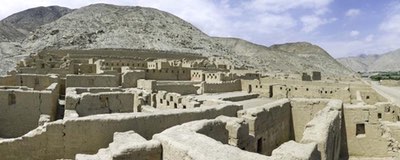
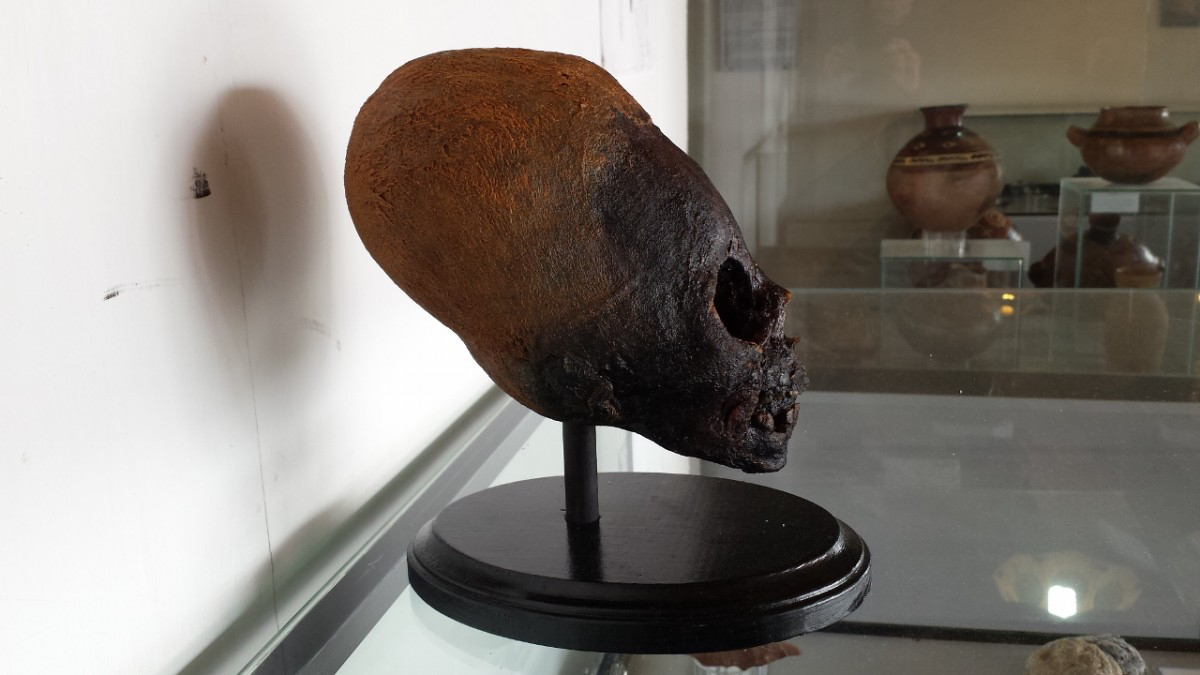
 The enigmatic Paracas of the coast of Peru have not been the subject of many major studies and the reason why may be because they do not fit with the standard story of the peopling of this area. Most have presumed that their ancestors, like the majority of the indigenous populations of the Americas crossed the Bering Land Bridge from Siberia at least 12,000 years ago.
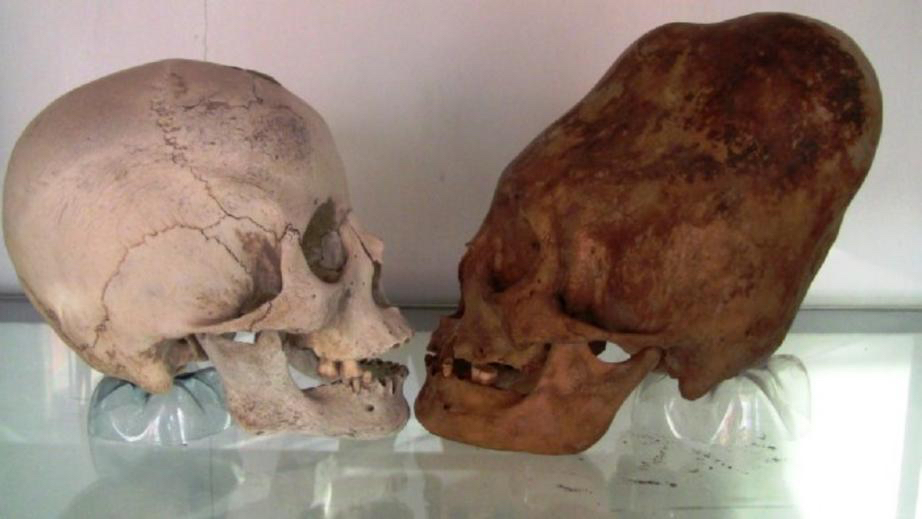 Most also believe that the elongated nature of the skulls is totally the result of head binding soon after childbirth, but morphological analysis by medical professionals, anthropologists and even chiropractors have shown that the original Paracas of about 3000 years ago at least as regards the head shape were at a minimum a subspecies of Homo sapiens, and perhaps even a different species.
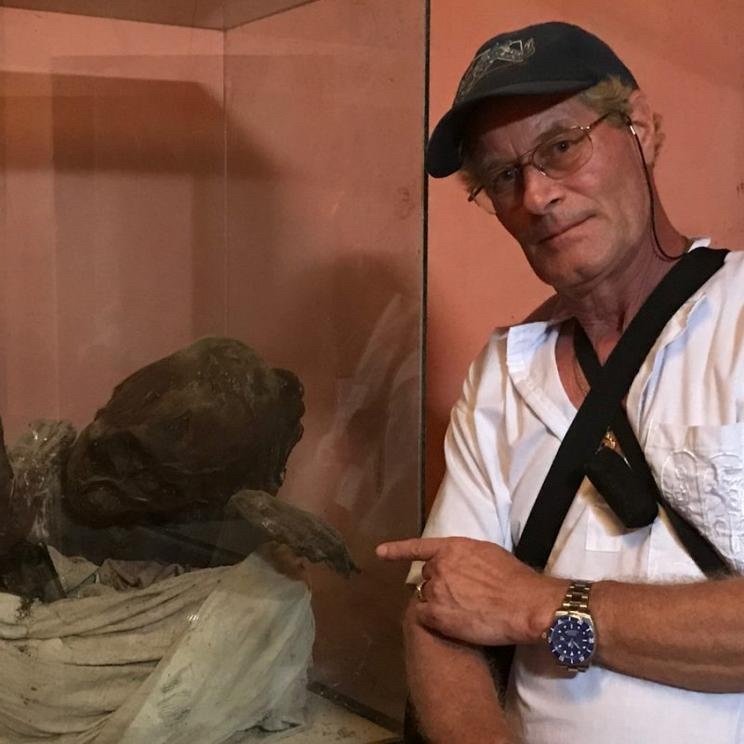 DNA analysis carried out by 2 North American laboratories a few years ago of 19 elongated skulls from Paracas Peru yielded mitochondrial, as in maternal DNA from 18 of them. The vast majority of the results showed that the haplogroups found matched those in the Crimea area of the Black Sea, where the other largest elongated skulls in the world have been found.
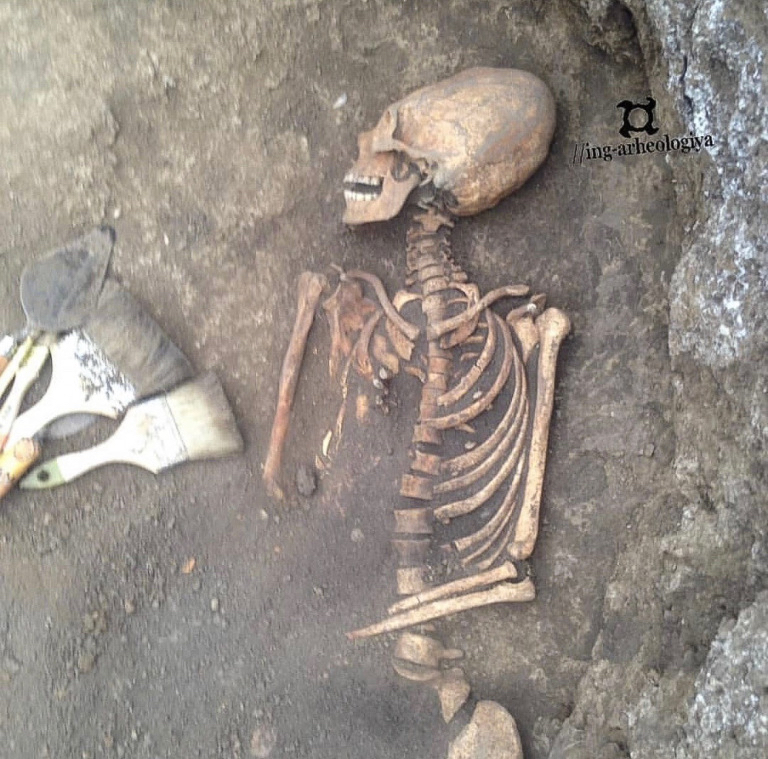 Elongated skull skeleton recently excavated in Russia above. Also, the full skeleton of a 2 year old was found during the construction of a bridge from Crimea to the Russian mainland. Its skull was almost the size of its torso. It is unknown whether these or others have been DNA tested.
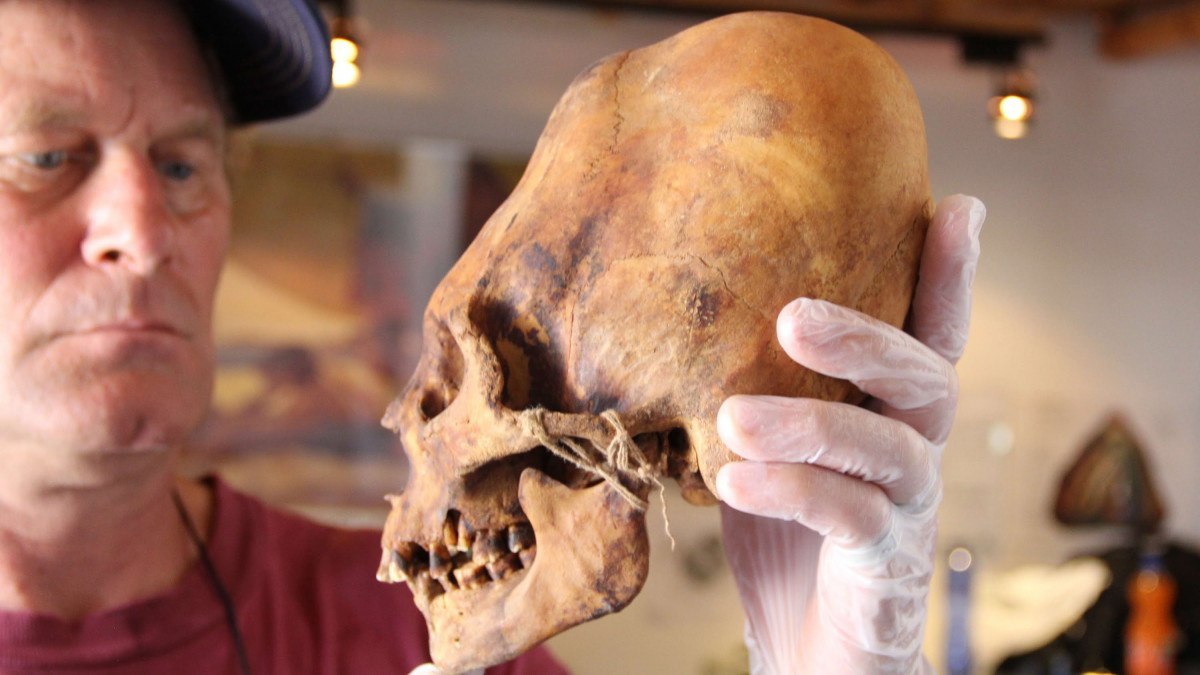 In late 2018 several samples from 2 perfectly preserved Paracas skulls carbon dated at 2400 years old were conducted in the US again showed a strong correlation with haplogroups from the Black Sea area; the samples included teeth, bone, skin, hair, tendon and even spinal cord fluid. And this week results from a a Canadian lab from the same 2 skulls showed that 3 of the 4 samples were haplogroup H, which again can be associated with the Black Sea area. Nuclear DNA, as in paternal is now being analyzed by the US laboratory.
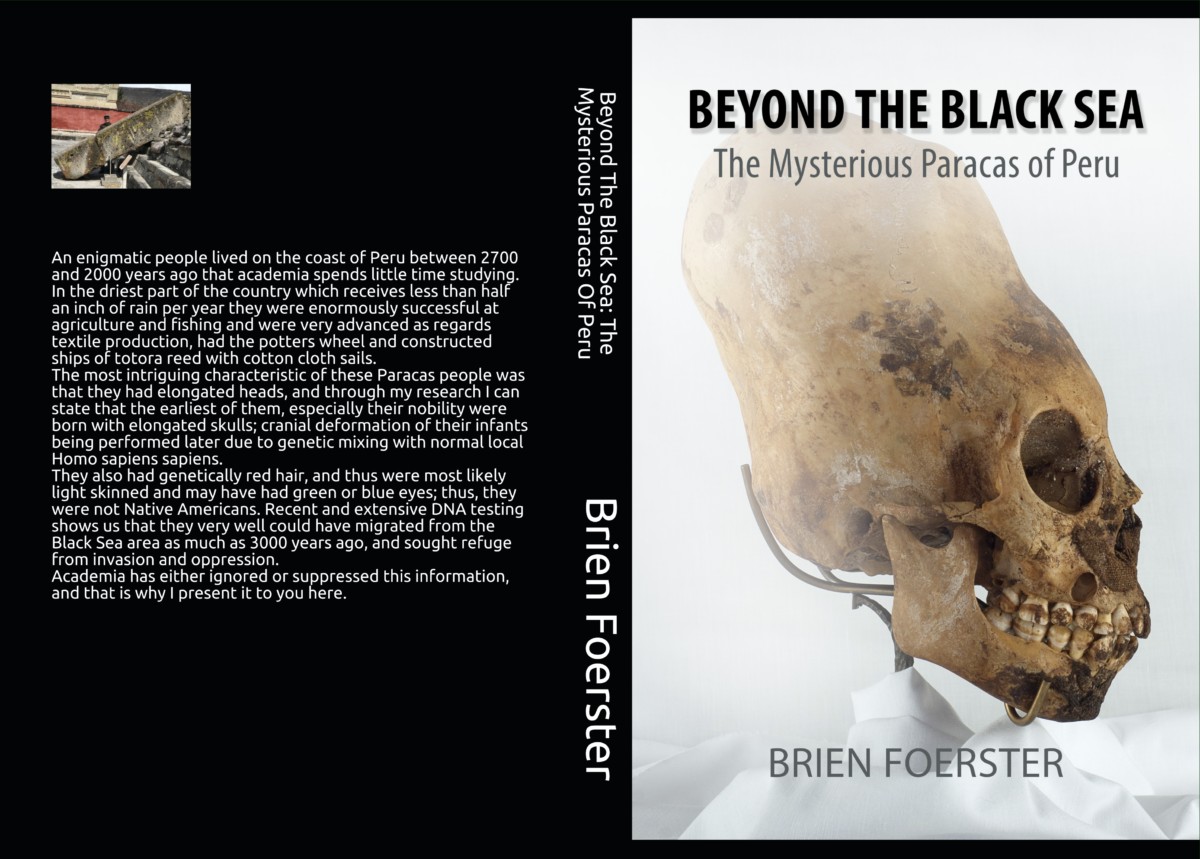 Most of the DNA analysis as well as a thorough exploration of who the Paracas people were can be seen in my book about them here:
 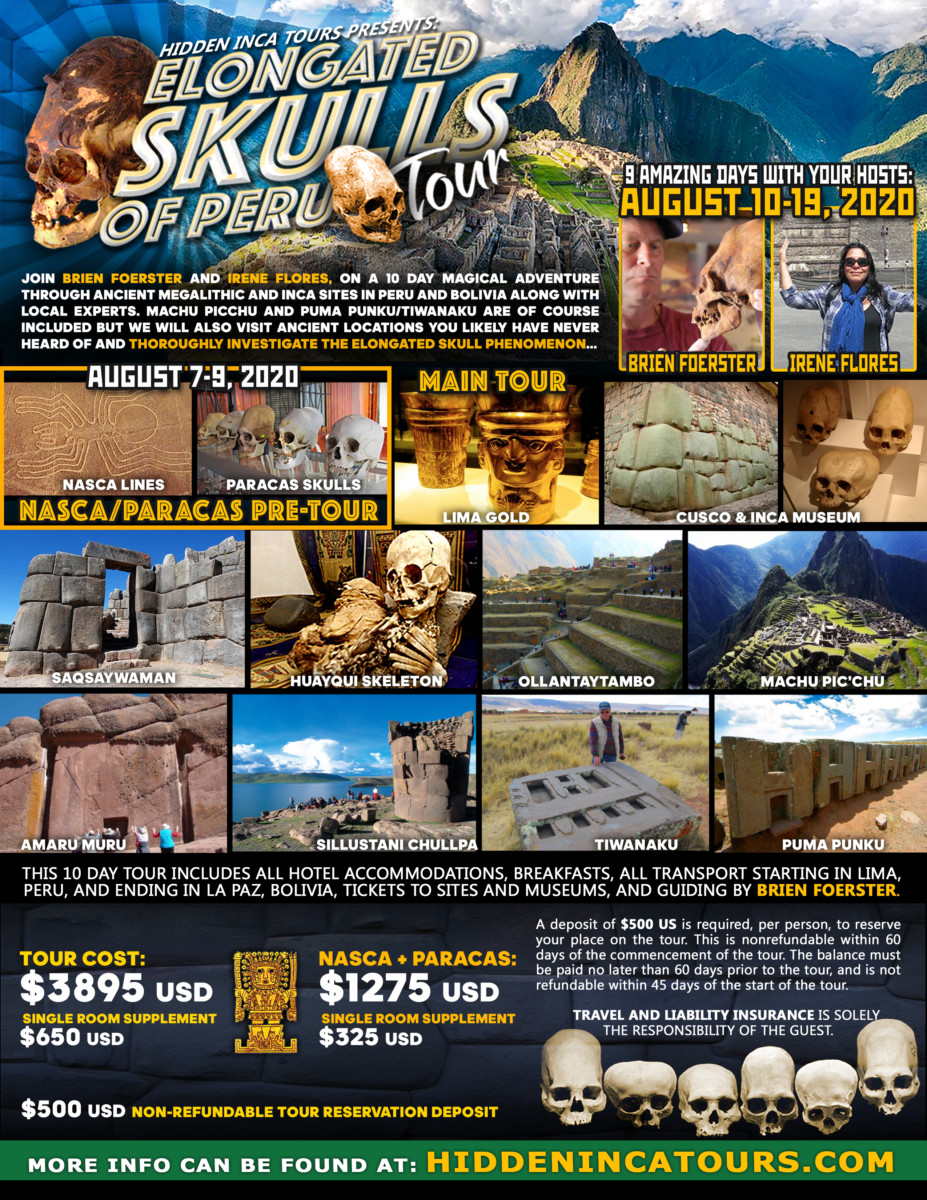 And if you would like to see the skulls in person, as well as Machu Picchu, Nazca, Puma Punku, Cusco and more then consider joining our August 2020 tour here:
 About Brien Foerster
Brien has explored more than 90 countries but his true passion is researching and writing about the ancient megalithic works found in Peru, Bolivia, Mexico, Easter Island, Egypt, England, and beyond. His 23 books are available on this website & amazon.com. He has appeared 15 times on the Ancient Aliens television series as well as numerous other TV and radio presentations. Brien's popular Youtube channel contains more than 850 videos related to hidden history and megalithic sites.